Steel framing

Cold-Formed Steel Framing

Light-gauge steel studs, tracks, joists and trusses for load-bearing and non-load-bearing work, built for Malaysian conditions.

The basics

What is cold-formed steel framing?

Cold-formed steel (CFS) framing uses light-gauge steel studs, tracks, joists and structural members that are roll-formed at room temperature.

Forming the steel cold gives tight tolerances and a high strength-to-weight ratio. CFS is used for both load-bearing and non-load-bearing work, in residential and commercial builds.

Members are made from galvanized coil, so they keep their zinc protection and arrive at a consistent size. Studs, tracks and joists are joined with self-drilling screws, which makes frames quick to assemble on site or as pre-built wall panels.

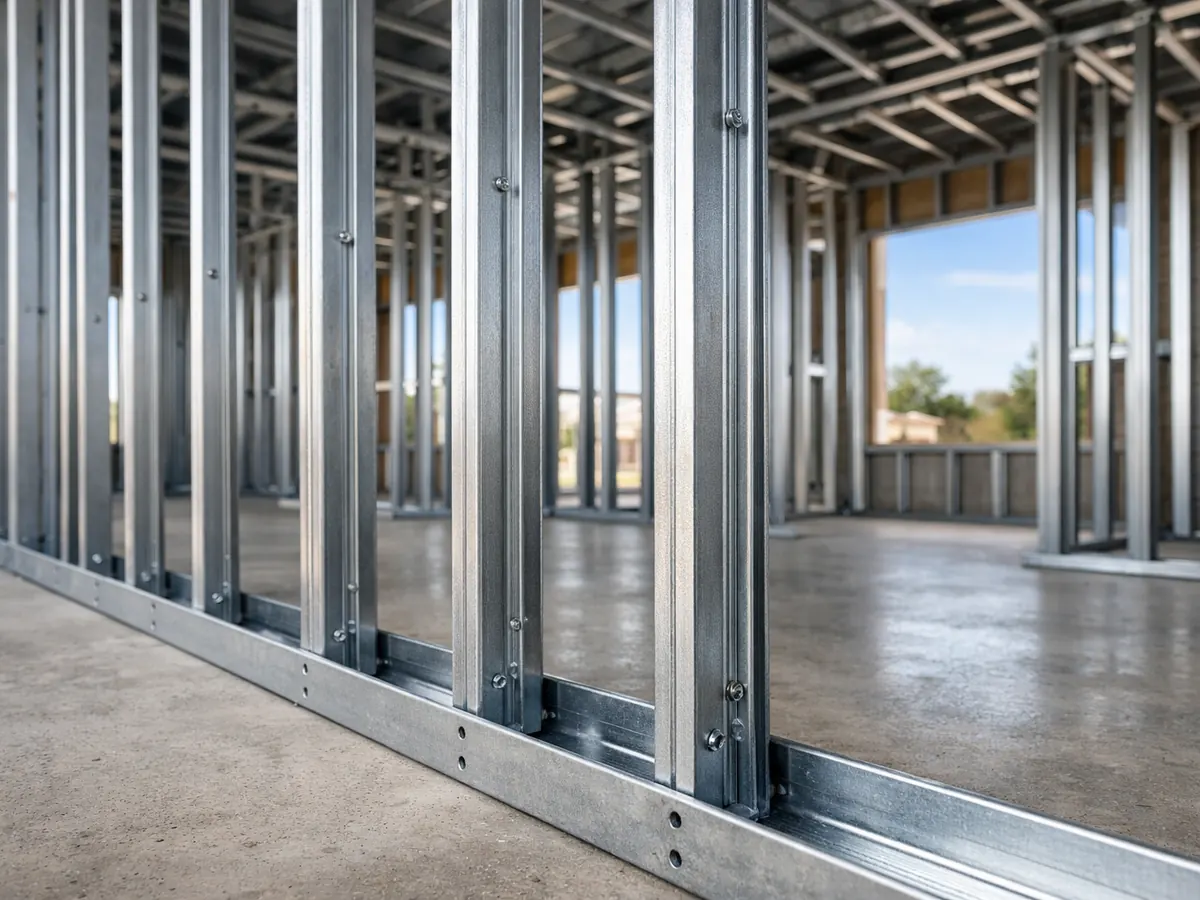
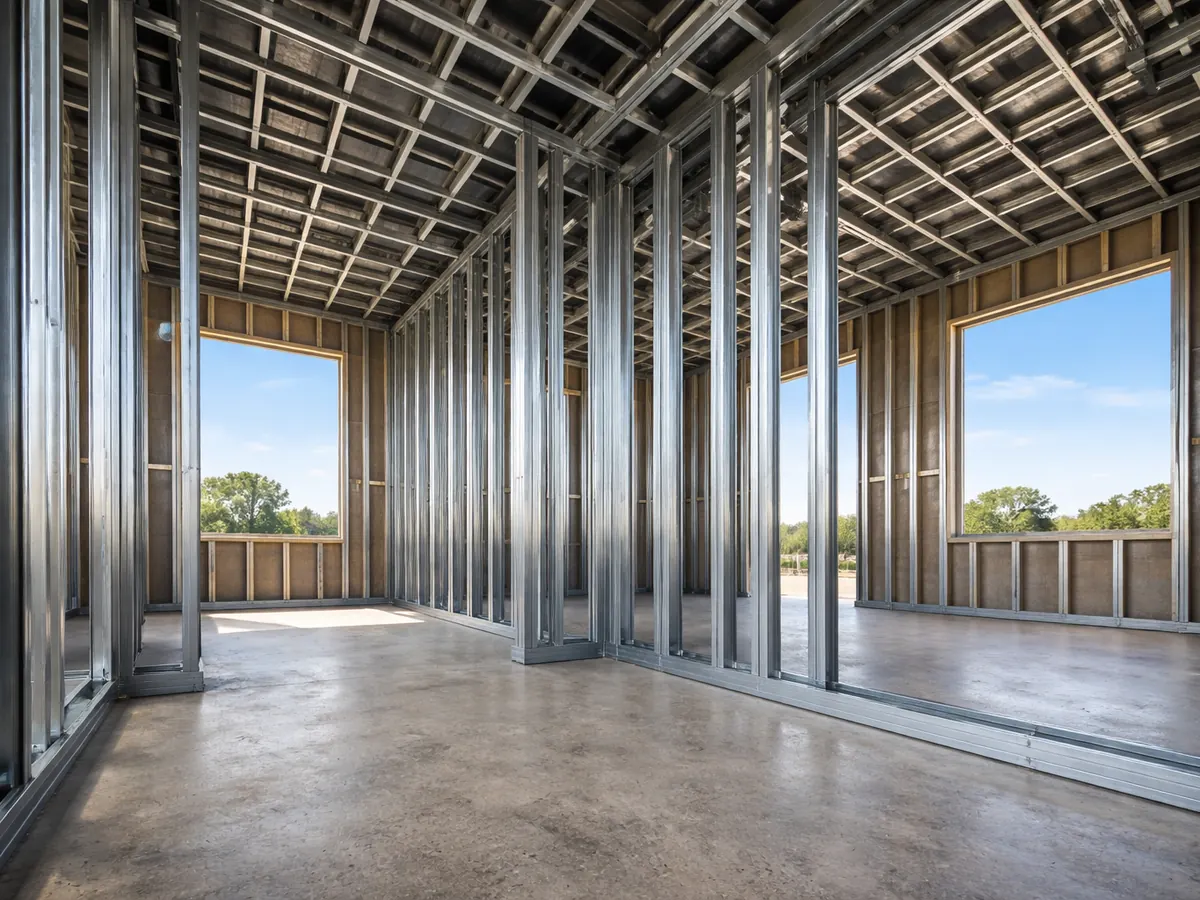
Galvanized steel stud walls framed inside a building

Applications

Where steel framing works

From a single partition wall to a full building, CFS covers most of the structure above the slab.

  • Interior partitions
  • Exterior load-bearing walls
  • Floor systems
  • Ceiling systems
  • Roof trusses
  • Mezzanines
  • Extensions & renovations
  • Site offices & modular buildings

Compare

Steel vs timber vs brick / block

How the three main ways to build compare on the things that matter on a Malaysian site.

Steel compared with timber and brick / block
Property Steel Best Timber Brick / Block
Durability ExcellentWon’t rot, split, creep or warp. Keeps its strength for the life of the building. FairRots, warps and splits over time, especially in humid climates. GoodLong-lasting, but can crack with settlement and movement.
Fire ExcellentNon-combustible. The frame won’t add fuel to a fire. PoorCombustible. Needs treatment or lining to slow fire spread. ExcellentNon-combustible.
Termites ExcellentNothing for termites to eat. PoorA major risk in Malaysia. Needs chemical treatment and inspections. GoodWalls are safe, but timber roof frames and fittings are still at risk.
Moisture / Humidity ExcellentZ275 galvanized. Doesn’t absorb water, swell or grow mould. PoorAbsorbs moisture, then swells, rots and grows mould. FairPorous. Can hold damp, stain and grow mould on walls.
Build speed ExcellentPre-cut, pre-punched and screw-fixed. No curing time. FairMeasured, cut and fitted by hand on site. PoorSlow wet trades: laying, curing and plastering.
Weight ExcellentLight to handle, with a high strength-to-weight ratio. Lighter loads on foundations. GoodLight to moderate. PoorHeavy. Needs bigger footings and more handling.
Dimensional consistency ExcellentRoll-formed to tight tolerances. Every piece straight and identical. FairVaries piece to piece. Shrinks and twists as it dries. FairDepends on workmanship. Walls need plaster to true up.
Recyclability ExcellentSteel is fully recyclable, including offcuts. FairTreated timber is hard to recycle. FairMostly ends up as rubble or fill.
Site waste ExcellentMinimal. Cut to length in the factory. FairOffcuts and rejected crooked pieces. PoorBroken blocks, mortar, bags and wet waste.

General comparison for typical residential and light commercial construction. Actual performance depends on design and installation.

Benefits

Why builders switch to steel

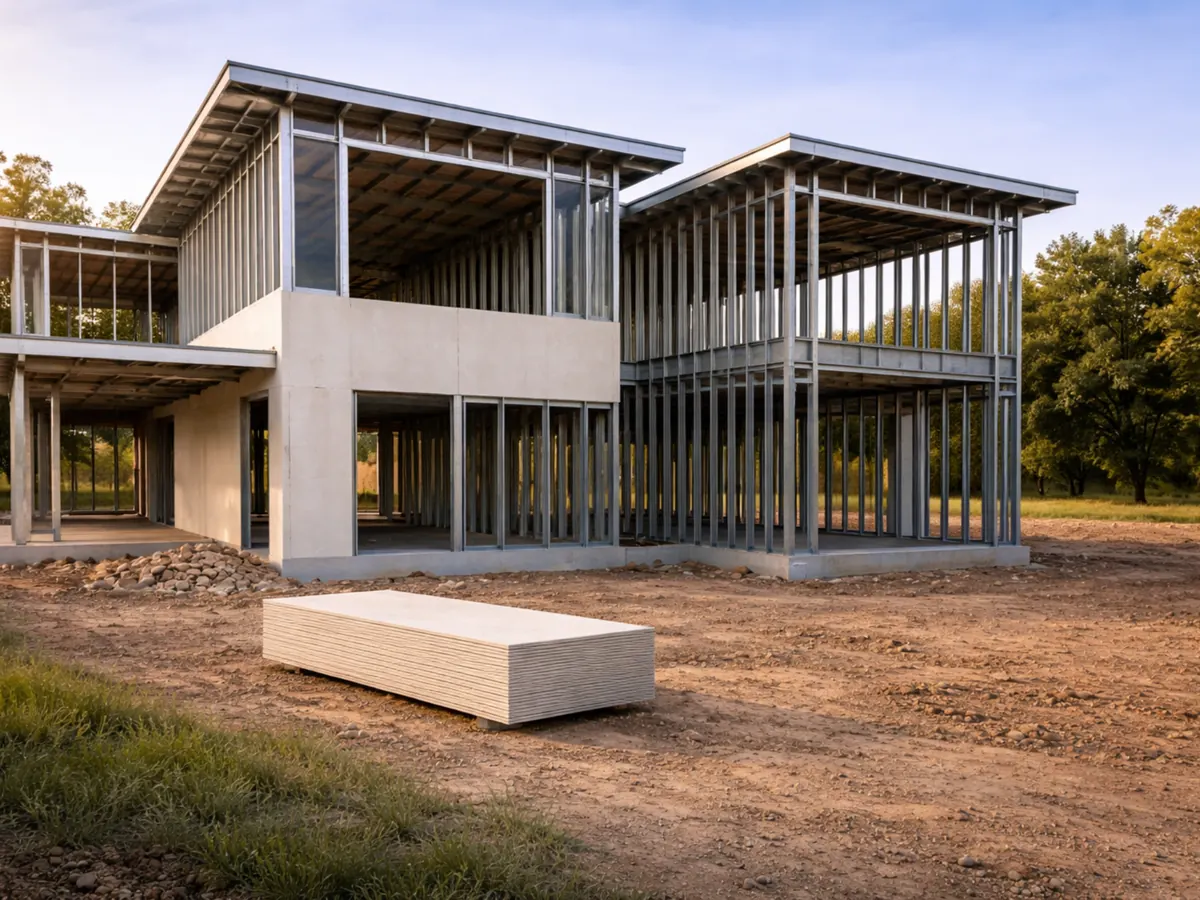
Steel-framed house on site, with boards stacked ready for lining

Built to last the life of the building

Durability

Steel doesn’t rot, split, creep or warp. A galvanized steel frame keeps its strength and shape for decades, with no seasonal movement to crack plaster or pop screws. That means fewer call-backs for the builder and lower maintenance for the owner.

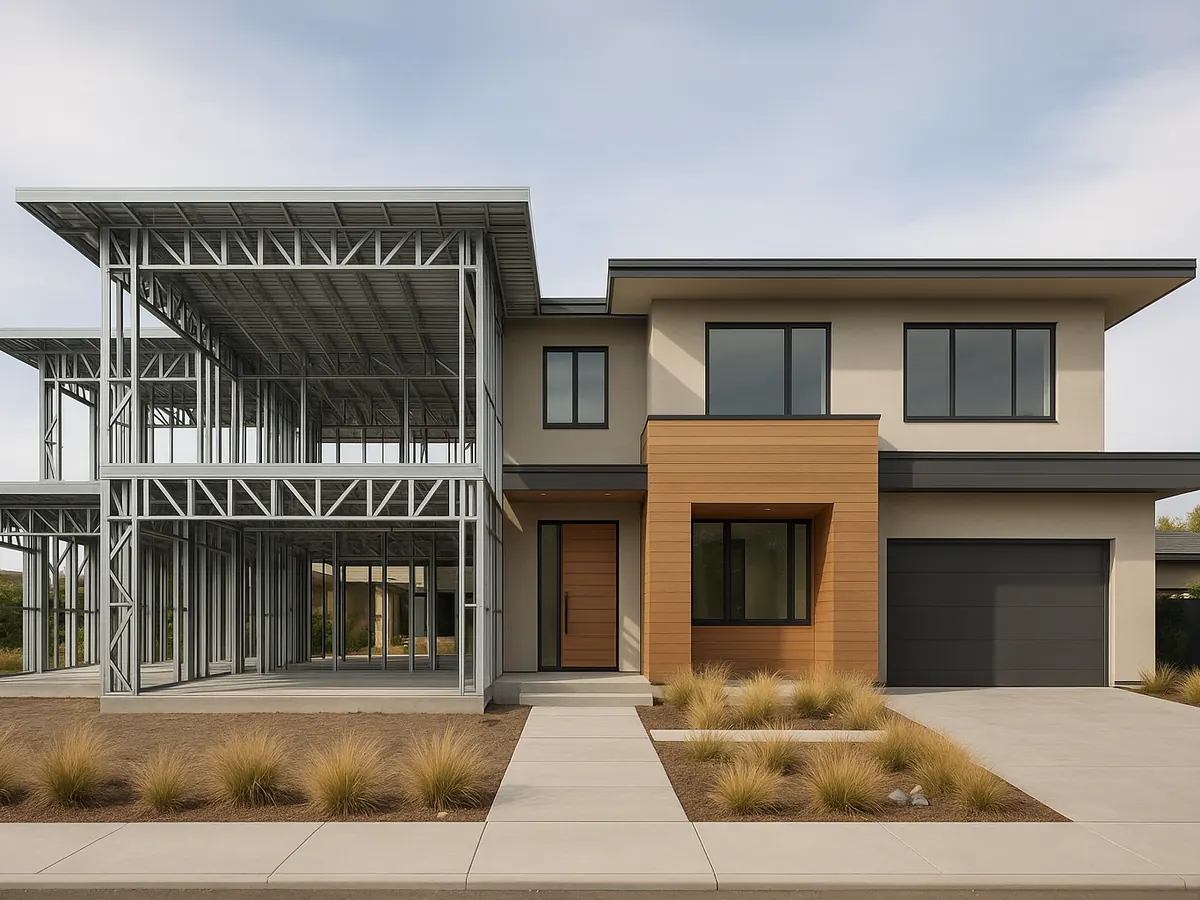
Two-storey house shown part steel-framed and part finished

A frame that won’t feed a fire

Fire Resistance

Steel is non-combustible, so the frame itself adds no fuel to a fire. Paired with a suitable fire-rated board system, steel-framed walls and ceilings can be built to the fire rating your project needs.

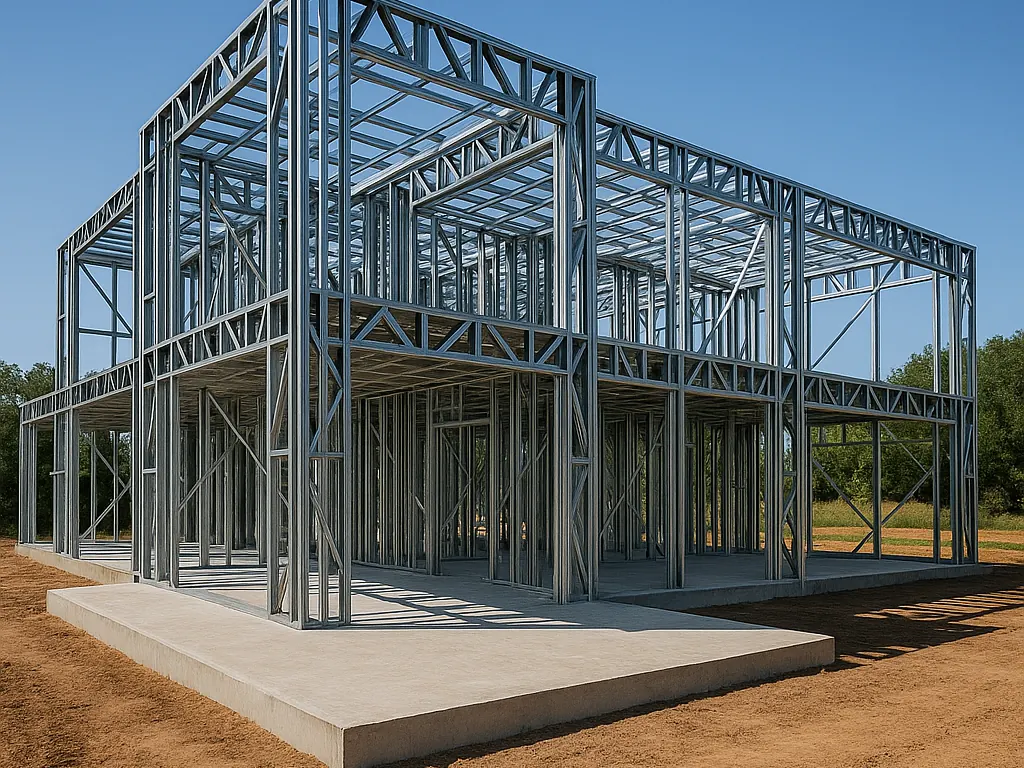
Galvanized steel frame for a two-storey building on its slab

Stable through the monsoon

Moisture Resistance

Our framing is protected by a Z275 (G90) hot-dip galvanized zinc coating. Steel doesn’t absorb water, so there’s no swelling, rot or mould inside your walls. Frames stay straight and stable through the monsoon season, year after year.

Steel wall studs and ceiling joists inside a framed building

Nothing for termites to eat

Pest Resistance

Termites do serious damage to Malaysian buildings every year, and most of it is hidden until it’s expensive. Steel gives them nothing to eat. The frame needs no chemical timber treatment, and there’s no hidden damage waiting behind the plaster.

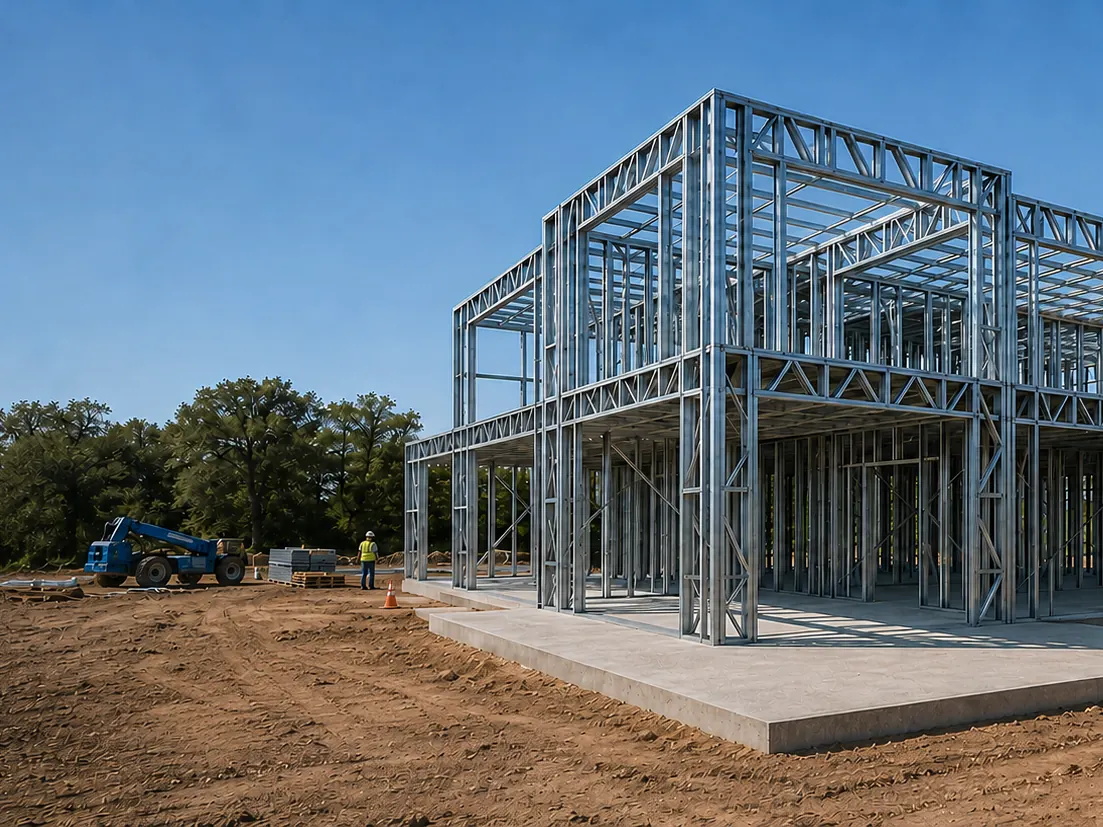
Steel frame going up on site, with a telehandler and crew alongside

Faster from slab to roof

Speed

Members arrive cut to length and pre-punched for services, so crews screw frames together instead of measuring and cutting on site. Steel is light to carry and lift, trusses go up quickly, and there’s no curing time like blockwork and plaster.

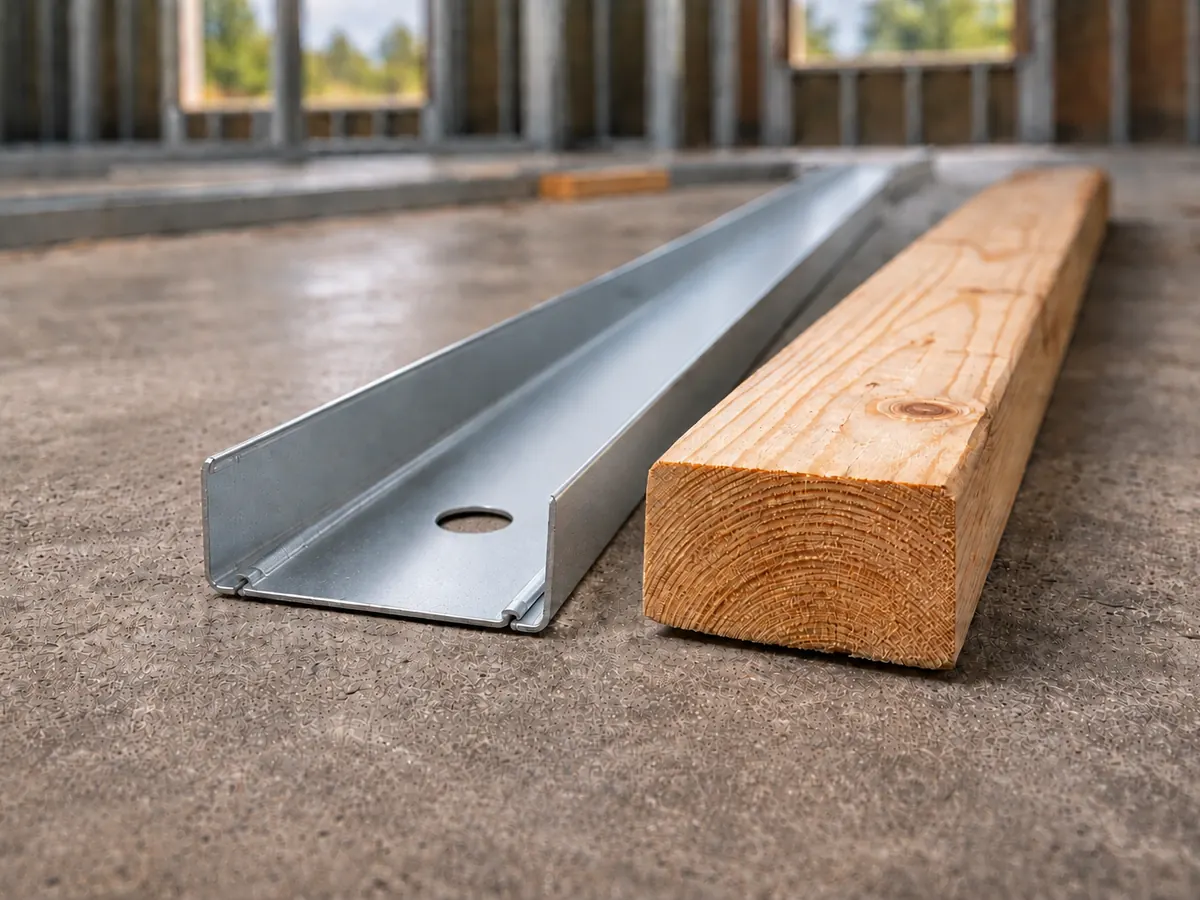
Straight roll-formed steel track beside a timber stud

Straight and identical, every time

Dimensional Consistency

Every stud is roll-formed on the same machine to the same profile, so each piece is straight and the same as the last. Walls come out plumb and square, which makes boarding, tiling and fitting doors and windows faster and neater.

Send us your plans. We’ll quote it free.

Free take-off and an itemised quote in MYR. No obligation.